The Poetry of Presence: How the Art of Being Fully There Transforms Education
There is a quiet magic in the way a child’s eyes light up when they realize they are truly seen—not just as a student, but as a soul unfolding. It is a moment that exists beyond lesson plans and standardized tests, a fleeting yet profound encounter where education transcends its mechanical definitions and becomes something sacred. This is the poetry of presence, the art of being fully there, not just in body but in spirit, for every learner who walks through the classroom door.
The Alchemy of Attention
In a world that moves at the speed of distraction, the act of paying attention has become a radical form of love. Teachers who master this alchemy do not merely instruct; they witness. They notice the way a student’s fingers tap restlessly against their desk when anxiety hums beneath the surface, or how another’s gaze drifts toward the window when the weight of unspoken struggles becomes too heavy. This kind of attention is not passive observation—it is an active, almost spiritual practice of holding space for another human being’s complexity.
Consider the child with dyslexia who has spent years feeling like a puzzle piece that doesn’t fit. The teacher who kneels beside them, not to offer empty reassurances but to say, “I see how hard you’re trying, and I’m here to walk this path with you,” performs a small miracle. They transform the classroom from a place of judgment into a sanctuary of belonging. This is the heart of inclusive education: not just accommodating differences, but celebrating them as essential threads in the tapestry of learning.
The Unseen Curriculum of Emotional Landscapes
Education is often discussed in terms of cognitive development, but what of the emotional landscapes that shape a child’s ability to learn? The student who arrives at school with a heart heavy from family strife, or the one who carries the invisible weight of societal expectations, does not leave those burdens at the door. They bring them into every lesson, every interaction, every moment of silence between words.
Social-emotional learning is not a checklist of skills to be mastered; it is the delicate art of helping children navigate the terrain of their own hearts. It is the teacher who pauses mid-lesson to ask, “How are you feeling today, really?” and then listens—not to fix, but to validate. It is the creation of a classroom culture where vulnerability is not weakness but courage, where emotions are not distractions but data points in the story of a child’s growth. When we honor these emotional landscapes, we teach children that their inner worlds matter as much as their academic achievements.
The Myth of the Perfectly Inclusive Classroom
There is a dangerous illusion in education that inclusion is a destination—a perfectly designed classroom where every child fits seamlessly into the rhythm of learning. But inclusion is not a static state; it is a living, breathing practice, a daily negotiation of space, time, and human connection. It is the teacher who rearranges the desks for the third time in a week because one student needs more room to move, or who stays after school to help another practice social cues they struggle to grasp. It is the recognition that equity does not mean treating every child the same, but giving each what they need to thrive.
This is where the concept of neurodiversity becomes revolutionary. It asks us to reframe differences not as deficits to be corrected, but as variations in the human experience to be understood and embraced. The autistic child who stims during a lesson is not disrupting the class; they are communicating in their own language. The student with ADHD who blurts out answers is not defying authority; they are engaging with the world in a way that makes sense to them. When we design classrooms with these truths in mind, we stop asking children to conform to the system and start asking the system to adapt to them.
The Teacher as Gardener
Teaching is often compared to gardening, and for good reason. Like a gardener, a teacher does not create growth—they cultivate the conditions for it to occur. They understand that some plants need more sunlight, others more shade; some thrive with frequent watering, others with less. The art lies in knowing which is which and tending to each with care.
This is the essence of differentiated instruction, a practice that is often reduced to a buzzword but is, in truth, a deeply human endeavor. It is the teacher who prepares three versions of the same lesson, not because it is efficient, but because it is necessary. It is the recognition that a child’s potential cannot be measured by a single standard, and that true learning happens when we meet students where they are—not where we wish them to be.
The Weight of Being Seen
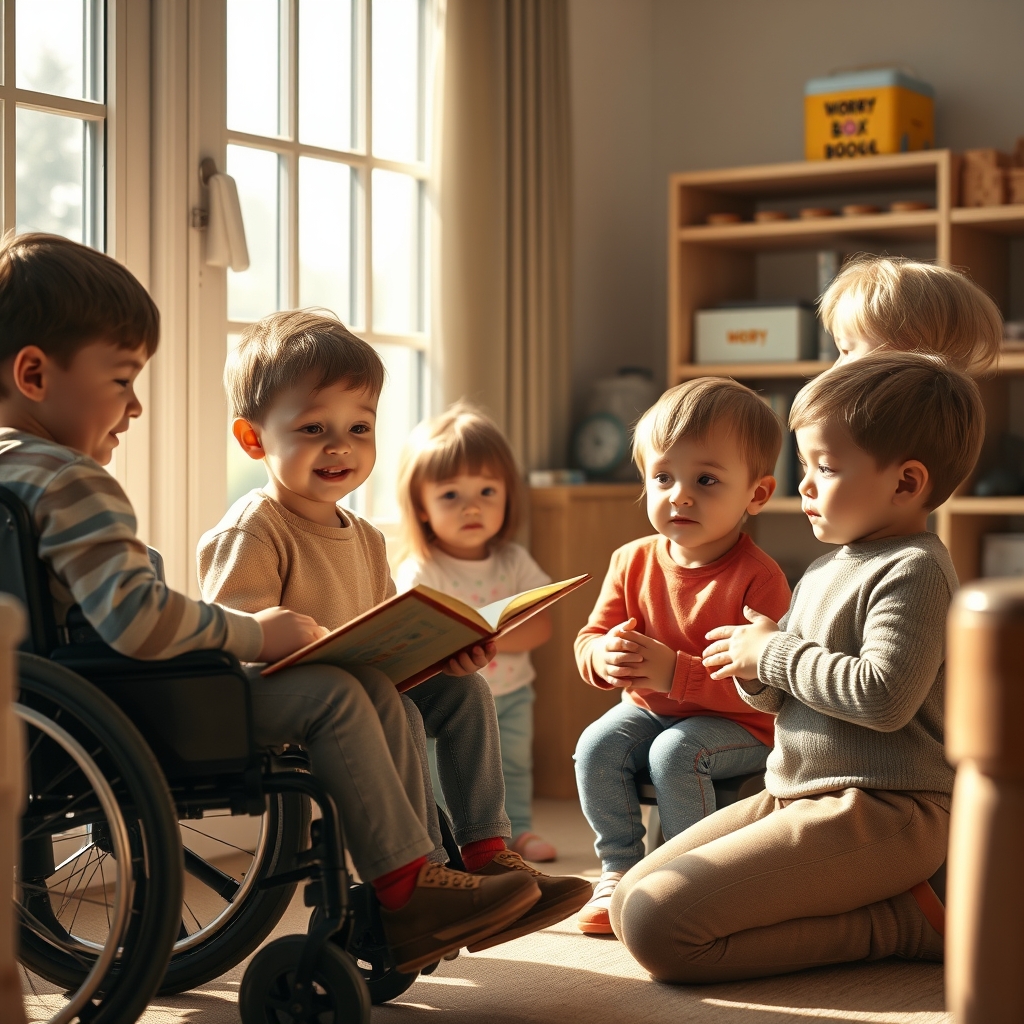
There is a story I heard once about a teacher who kept a “worry box” in her classroom. Students could write down their fears, their frustrations, their small and large sorrows, and slip them into the box anonymously. At the end of each week, she would read them aloud—not to solve the problems, but to acknowledge them. The act of being heard, even in silence, can be transformative. It tells a child, “Your pain is not invisible. Your joy is not insignificant. You are not alone.”
This is the quiet power of presence in education. It is not found in grand gestures or elaborate programs, but in the small, consistent acts of showing up—fully, authentically, and without reservation. It is the teacher who remembers the name of a student’s pet hamster, or who notices when a usually chatty child falls silent. It is the classroom where every child, regardless of ability or background, feels that they are exactly where they are meant to be.
The most profound lessons in education are not the ones we plan, but the ones that emerge when we create spaces where children feel safe enough to be themselves. In these spaces, learning is not a performance but a collaboration, not a race but a journey. And perhaps, if we are lucky, we leave these spaces not just smarter, but more human—more connected, more compassionate, more alive to the poetry of being fully present in our own lives and in the lives of others.