The Breath Between the Words: How Silence Speaks the Language of Inclusive Education
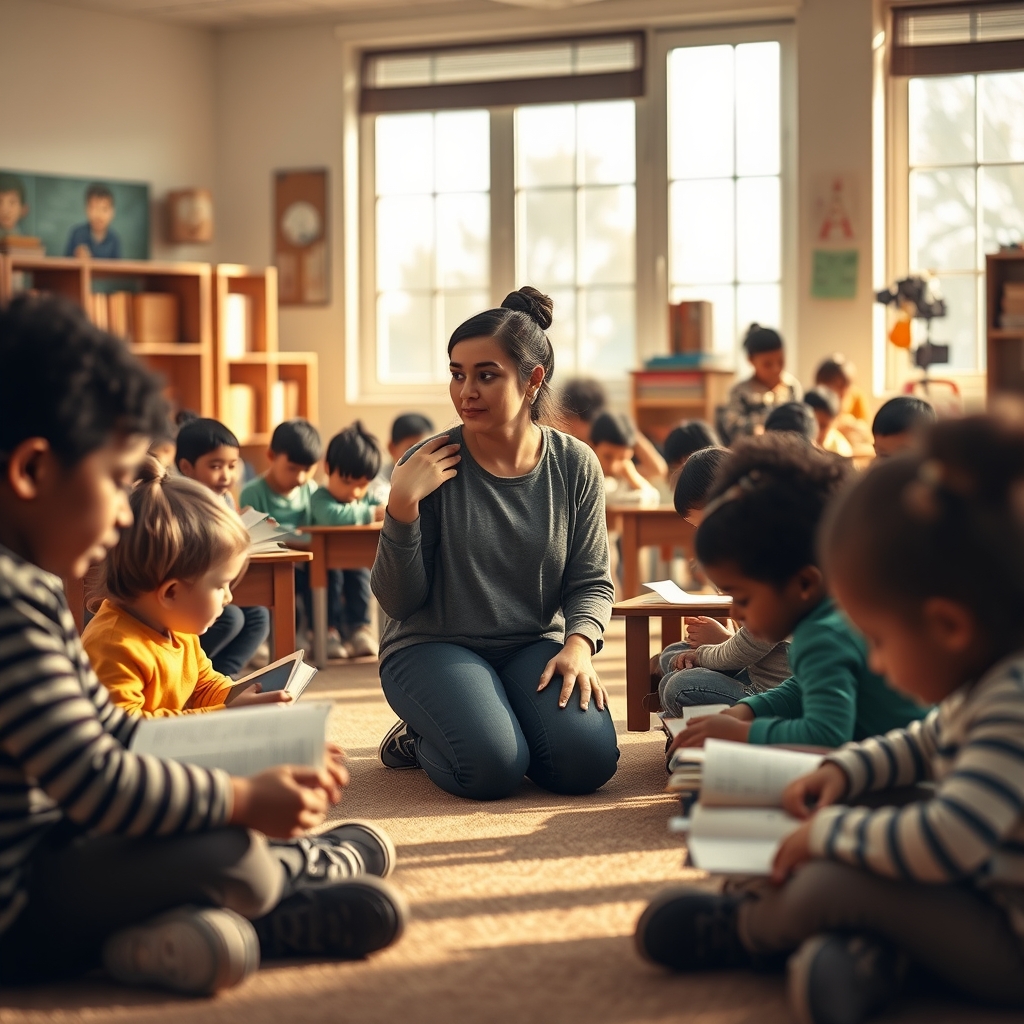
The classroom hums with the quiet electricity of thirty young minds, each one a universe of thoughts, fears, and unspoken questions. There is a rhythm to the way they move—some restless, some still, some lost in the labyrinth of their own making. And then there is the silence. Not the absence of sound, but the presence of something deeper, something that lingers in the spaces between the words we speak, the lessons we teach, the expectations we set. It is in this silence that the true language of inclusive education is spoken, not in the loud declarations of policy or the polished speeches of professional development, but in the quiet, unguarded moments where a child feels seen, heard, and, most importantly, understood.
The Unseen Curriculum of Stillness
We talk often of the hidden curriculum—the unspoken lessons that shape a child’s experience of school. The way a teacher’s gaze lingers a second too long on the student who struggles to read, the subtle shift in tone when addressing the child who disrupts the class, the unspoken hierarchy of who gets called on first. These are the invisible threads that weave the fabric of belonging or exclusion. But what of the silence? What lessons does it hold?
Silence is not empty. It is a vessel, waiting to be filled with meaning. In the hands of a skilled educator, it becomes a tool—one that can invite reflection, offer comfort, or create space for a child to find their voice. Think of the student who hesitates before answering a question, their fingers twisting in the hem of their shirt. The pause that follows is not a void; it is an invitation. It says, I am here. I am listening. Take your time. In that silence, the child learns that their thoughts are worth waiting for, that their voice matters. This is the essence of inclusive education—not the grand gestures, but the quiet acknowledgment of a child’s existence, their struggles, and their triumphs.
The Alchemy of Listening
To listen is to hold space. It is an act of generosity, one that requires us to set aside our own agendas, our need to fix, to direct, to move things along. In the rush of lesson plans and standardized tests, it is easy to forget that education is not just about imparting knowledge, but about receiving it. The child who doodles in the margins of their notebook, the one who stares out the window during a math lesson, the one who speaks in fragments—each of them is offering us a story, if only we are willing to listen.
But listening is not passive. It is an active, almost sacred, act. It requires us to tune into the frequencies of a child’s inner world, to hear the things they cannot yet articulate. The student who acts out in class may not be defiant; they may be drowning in a sea of frustration, unable to find the words to ask for help. The child who withdraws may not be disinterested; they may be carrying a weight too heavy for their small shoulders. When we listen—truly listen—we begin to see the child behind the behavior, the soul behind the struggle. And in that seeing, we offer them the greatest gift of all: the knowledge that they are not alone.
The Geography of Belonging
Belonging is not a destination; it is a landscape, one that shifts and changes with every interaction, every glance, every word spoken or left unspoken. In an inclusive classroom, this landscape is rich and varied, a tapestry of individual stories woven together by the threads of empathy and understanding. But how do we create such a space? How do we ensure that every child, regardless of their abilities, their challenges, or their differences, feels that they have a place within it?
The answer lies not in the grand designs of curriculum or the rigid structures of behavioral interventions, but in the small, everyday moments where connection is forged. It is in the way a teacher kneels beside a child’s desk to offer a quiet word of encouragement. It is in the choice to celebrate a student’s progress, no matter how small, rather than focusing on what they have yet to achieve. It is in the decision to see the child first, before the label, before the diagnosis, before the expectations placed upon them by a system that often values conformity over individuality.
The Fragile Architecture of Trust
Trust is the foundation upon which inclusive education is built. Without it, the most well-intentioned strategies will crumble. But trust is not something that can be demanded or manufactured; it must be earned, one interaction at a time. It is built in the moments when a child feels safe enough to take a risk, to make a mistake, to be vulnerable. It is reinforced when a teacher responds not with judgment, but with curiosity—Tell me more. I want to understand.
Yet trust is fragile. It can be shattered by a single dismissive comment, a rolled eye, a sigh of frustration. In the delicate ecosystem of the classroom, every word, every gesture, every silence carries weight. The child who has been told, in ways both subtle and overt, that they do not belong, will not easily trust that this time will be different. It is our responsibility, as educators, to prove them wrong—not with words, but with actions. To show them, day after day, that this classroom is a place where they are valued, where their voice matters, where they are home.
The Poetry of Presence
In a world that moves at breakneck speed, where the demands of the curriculum and the pressures of assessment often leave little room for the unquantifiable, it is easy to forget the power of simply being. Presence is not a strategy; it is a state of being. It is the teacher who notices the student who is having a bad day and offers a quiet word of support. It is the moment of shared laughter that lightens the weight of the world. It is the unspoken understanding that passes between a child and an adult who truly sees them.
Presence is the antidote to the loneliness that so many children feel, even in a room full of their peers. It is the reminder that they are not just a name on a roster or a data point on a spreadsheet, but a human being with a heart that beats, a mind that wonders, and a soul that yearns for connection. In the poetry of presence, we find the true meaning of inclusive education—not as a set of practices or policies, but as a way of being in the world, one that honors the uniqueness of every child and the shared humanity that binds us all.
The classroom is more than a place of learning; it is a living, breathing entity, shaped by the stories of those who inhabit it. And in the quiet spaces between the words, in the pauses where meaning lingers, we find the heart of what it means to educate—not just the mind, but the soul. For it is here, in the unspoken language of silence, that every child learns whether they belong. And it is here that we, as educators, must listen most closely, for it is in these moments that the true work of inclusion is done.