Building Tomorrow’s Minds: Strategies for a Dynamic and Engaged Learning Experience
The landscape of education is undergoing a profound transformation, moving beyond traditional models to embrace dynamic and learner-centric approaches. Educators, institutions, and learners alike are navigating an exciting era where innovation is not just an option, but a necessity. At the heart of this evolution lies the power of Personalized Learning, a methodology that tailors educational content, pace, and approach to individual student needs, preferences, and interests. This shift promises to unlock unprecedented levels of engagement and academic achievement for every learner, fostering environments where curiosity thrives and potential is fully realized.
The Core of Future Education: Personalization and Adaptability
Modern education recognizes that one size does not fit all. To truly empower learners, we must provide pathways that adapt to their unique strengths and challenges. This is where cutting-edge strategies come into play, creating a more responsive and effective learning journey.
Tailoring Paths with Personalized Learning and Adaptive Learning Platforms
Personalized Learning is more than just a buzzword; it’s a fundamental shift towards an education system that respects individual differences. It involves understanding each student’s learning style, prior knowledge, and goals to deliver highly relevant content. This is often powered by sophisticated Adaptive Learning Platforms that use algorithms to adjust the difficulty and type of material in real-time, ensuring students are always challenged appropriately without being overwhelmed.
These platforms analyze performance data to identify areas where a student excels or struggles, then recommend resources or activities to reinforce understanding. The goal is to create a dynamic learning path that is constantly optimizing for student success. This level of customization keeps students motivated and deeply involved in their own educational journey.
Empowering Learners with Artificial Intelligence In Education
The integration of Artificial Intelligence In Education (AIEd) is a game-changer, acting as the engine for many personalized and adaptive systems. AI can provide intelligent tutoring, automate grading of certain tasks, and offer predictive analytics to identify students at risk of falling behind. It frees up educators to focus on higher-order teaching, mentoring, and fostering critical thinking skills.
AI tools can also generate customized study materials, recommend relevant external resources, and even create virtual assistants to answer student queries 24/7. This technological support significantly enhances the capacity for individualized attention, making quality education more accessible and efficient for a broader audience.
Engaging Minds Through Innovative Pedagogies
Beyond personalization, effective learning requires engaging methodologies that capture student interest and foster deeper understanding. Innovative pedagogical approaches are key to making learning active, relevant, and enjoyable.
Microlearning and Gamification: Boosting Student Engagement
In a world of shrinking attention spans, Microlearning offers bite-sized, focused learning modules that are easy to consume and digest. This approach is perfect for busy schedules and reinforcing specific concepts. Coupled with Gamification, where game-like elements such as points, badges, and leaderboards are integrated into learning activities, Student Engagement soars. These strategies make learning feel less like a chore and more like an exciting challenge, motivating learners to achieve mastery.
Project Based Learning and Collaborative Learning: Real-World Skills
To prepare students for complex future challenges, traditional rote memorization is giving way to more practical approaches. Project Based Learning tasks students with solving real-world problems through extended projects, encouraging critical thinking, research, and application of knowledge. Similarly, Collaborative Learning emphasizes teamwork, communication, and peer interaction, mirroring the dynamics of professional environments. These methods cultivate essential Career Readiness skills alongside academic knowledge.
Integrating Social Emotional Learning and Neuroeducation
True education extends beyond academics to nurture the whole person. Social Emotional Learning (SEL) focuses on developing self-awareness, self-management, social awareness, relationship skills, and responsible decision-making. These competencies are crucial for personal well-being and effective interaction. Complementing this, Neuroeducation leverages insights from neuroscience to inform teaching practices, optimizing learning environments based on how the brain learns best. Understanding cognitive processes helps educators design more effective lessons and support student development holistically.
Bridging Physical and Digital Worlds: Flexible Learning Environments
The distinction between physical and digital learning spaces has blurred, giving rise to flexible models that cater to diverse needs and situations. These models emphasize accessibility and adaptability.
Hybrid Learning, Blended Learning, and Virtual Classrooms
The rise of flexible models like Hybrid Learning and Blended Learning combines face-to-face instruction with online components, offering the best of both worlds. This allows for greater flexibility in scheduling and personalized pacing, while still retaining the benefits of direct interaction. For fully remote or supplemental education, Virtual Classrooms provide interactive, synchronous learning experiences, connecting students and teachers regardless of geographical barriers. These environments are becoming staples in the modern educational toolkit, ensuring continuity and expanding access.
Mobile Learning and Open Educational Resources
The ubiquity of smartphones and tablets has propelled Mobile Learning to the forefront, enabling education anytime, anywhere. Learning apps, interactive content, and accessible platforms make it possible to engage with material on the go. Furthermore, Open Educational Resources (OER) provide free and openly licensed educational materials, from textbooks to full courses, democratizing access to high-quality learning content globally. These resources lower barriers to education and support continuous learning.
Preparing for Tomorrow: Skills, Credentials, and Lifelong Growth
The rapidly changing job market demands a new focus on practical skills and continuous development. Education must evolve to meet these demands, ensuring learners are prepared for dynamic careers and ongoing personal growth.
Skills Based Hiring and Competency Based Education
Employers are increasingly moving towards Skills Based Hiring, prioritizing demonstrated abilities over traditional degrees. This trend is closely aligned with Competency Based Education, which focuses on mastering specific skills and competencies rather than simply accumulating credit hours. Learners progress once they prove proficiency, ensuring they acquire relevant, marketable skills that directly translate to workplace success and strong Career Readiness.
Microcredentials and Lifelong Learning
In this evolving landscape, Microcredentials offer focused, verifiable recognition for specific skills or competencies. These short, stackable qualifications are ideal for upskilling, reskilling, and demonstrating expertise in niche areas, providing a flexible alternative to traditional degrees. They are a perfect fit for the imperative of Lifelong Learning, where individuals continuously acquire new knowledge and skills throughout their lives to adapt to new challenges and opportunities. This continuous engagement with learning is fundamental for personal and professional growth.
The Imperative of Digital Literacy
In an increasingly digital world, strong Digital Literacy is no longer optional; it is a foundational skill. This encompasses not just the ability to use technology, but also to critically evaluate online information, understand digital ethics, and safely navigate the digital landscape. Integrating digital literacy across all curricula ensures students are well-equipped to thrive in the modern information age.
Immersive Experiences and Practical Application
Engaging multiple senses and providing hands-on opportunities can dramatically deepen understanding and retention. Advanced technologies and practical activities are transforming how students interact with complex subjects.
Immersive Technology and STEM Activities
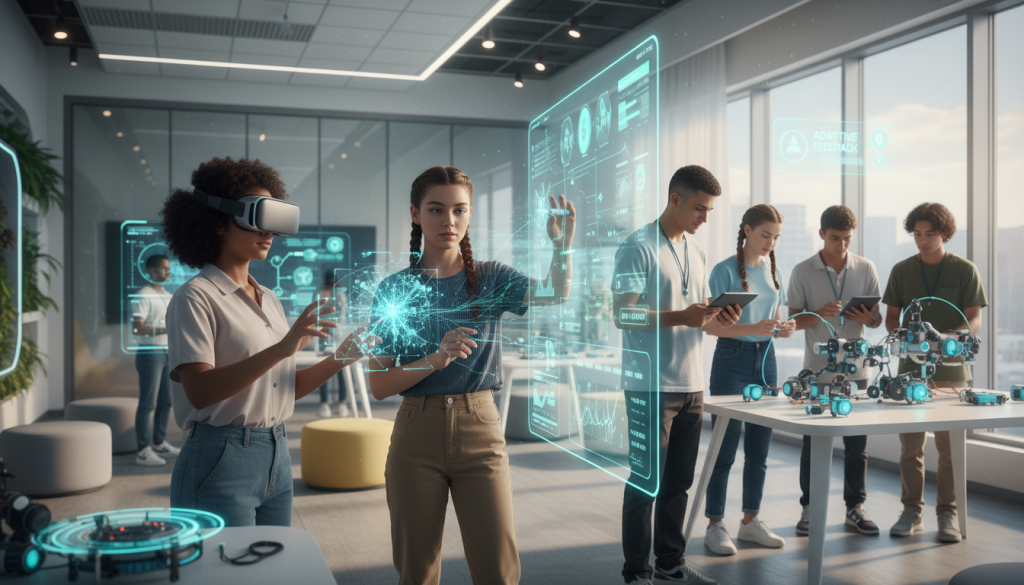
Immersive Technology, including Virtual Reality (VR) and Augmented Reality (AR), transports learners to historical events, allows them to dissect virtual organs, or explore distant galaxies. These experiences provide unparalleled context and engagement, making abstract concepts tangible. Complementing this, hands-on STEM Activities (Science, Technology, Engineering, and Mathematics) foster critical thinking, problem-solving, and innovation, preparing students for fields vital to future global progress. These practical applications are crucial for developing a deep understanding of scientific principles.
Peer To Peer Tutoring and Educational Podcasts
Learning often flourishes through collaboration. Peer To Peer Tutoring empowers students to teach and learn from one another, solidifying their own understanding while developing communication skills. Meanwhile, Educational Podcasts offer an accessible and flexible way to consume expert knowledge, thought-provoking discussions, and engaging stories on a wide array of subjects. They provide valuable supplemental learning opportunities, catering to auditory learners and those seeking insights on the go.
The future of education is not a singular path but a rich tapestry woven from diverse strategies and technologies. By embracing personalized approaches, fostering dynamic engagement, leveraging flexible learning environments, and prioritizing future-ready skills, we can cultivate an educational ecosystem where every learner is empowered to achieve their fullest potential. The challenge lies in thoughtfully integrating these innovations, ensuring they serve to amplify human connection and critical thinking, rather than replace them. Educators, policymakers, and learners must collaborate to continuously refine these strategies, building robust pathways for a future where learning is truly lifelong, equitable, and profoundly impactful.