The Soul’s Crucible: How the Fire of Digital Integration Forges the Hidden Bridges of a Child’s Imagination
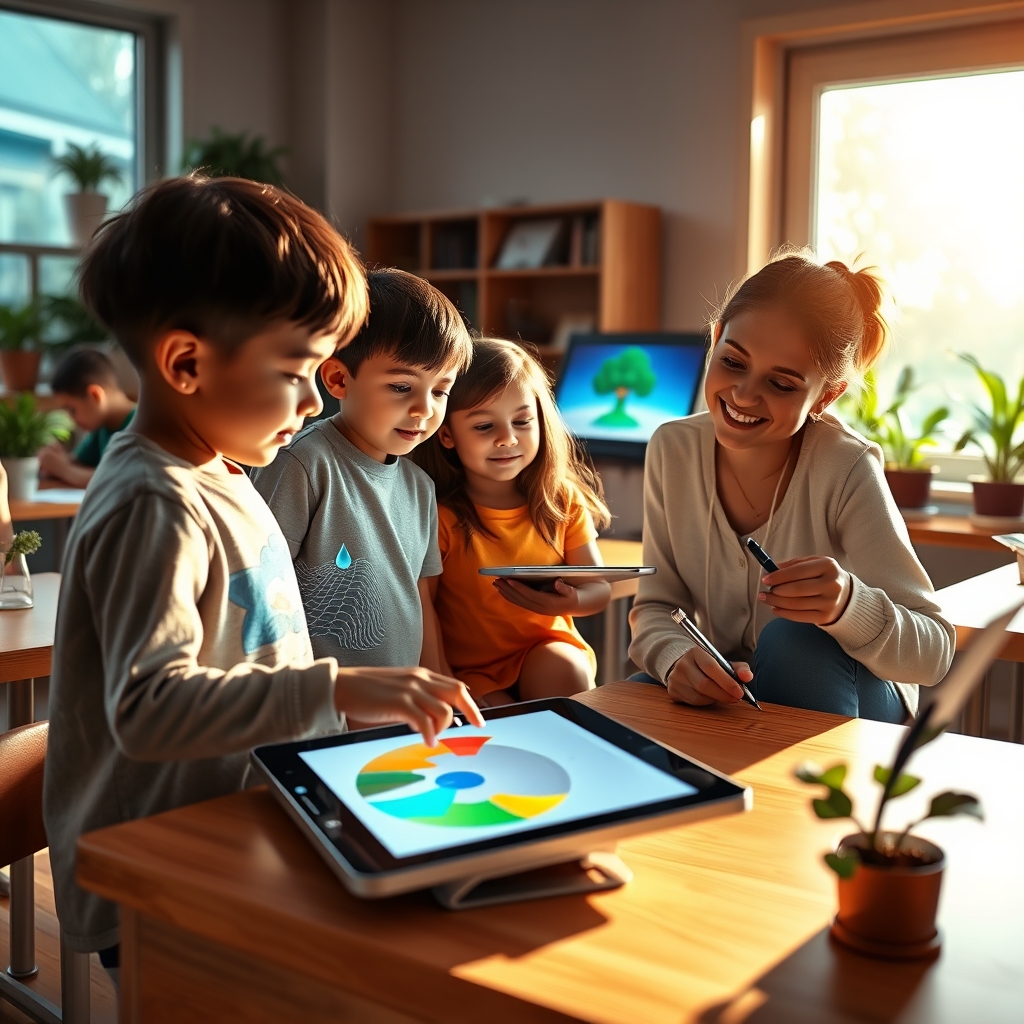
The first time I saw a child’s eyes widen at the glow of a screen, I felt the quiet tremor of something ancient meeting something new. It was not just the light reflecting in their pupils—it was the spark of a question, a whisper of possibility, the moment when the digital world ceased to be a distant realm and became, instead, a mirror held up to their own curiosity. That moment, fleeting as it was, carried the weight of a thousand unspoken dreams, each one waiting to be named, shaped, and set free.
The Alchemy of Pixels and Presence
There is a delicate balance in the dance between technology and tenderness, a balance that digital classroom integration seeks to honor. The screen is not merely a portal; it is a threshold, one that invites children to step beyond the boundaries of what they know and into the vast, uncharted territories of what they might yet discover. Yet, for all its promise, the digital realm can also feel like a labyrinth—one where the walls shift with every click, where the path forward is both illuminated and obscured by the very tools meant to guide.
I remember watching a teacher weave a lesson on the water cycle into an interactive simulation, her voice a steady anchor as the children navigated rivers of data, their fingers tracing the journey of a single droplet from cloud to sea. There was no worksheet, no rote memorization—only the quiet hum of engagement, the kind that comes when learning is not something done to a child but something done with them. The screen became a canvas, and their questions, the brushstrokes that brought it to life.
The Whisper of the Machine, the Echo of the Heart
But what happens when the machine’s whisper drowns out the echo of the heart? The fear is not unfounded—technology, for all its wonders, can also be a thief of presence, a siren call that lures us away from the messy, beautiful reality of human connection. Yet, when wielded with intention, it becomes something else entirely: a bridge, a catalyst, a way to deepen the very connections it might otherwise erode. The key lies not in the tool itself, but in the hands that guide it.
In a classroom where digital integration is done well, the screen is not a replacement for the teacher but an extension of their presence. It is not a substitute for conversation but an invitation to it. The children do not sit in silence, passively absorbing information; they lean into one another, their voices rising and falling like the tide, their laughter a counterpoint to the hum of the devices in their hands. The technology does not isolate—it connects, weaving threads between ideas, between people, between the known and the unknown.
The Unseen Architecture of Wonder
What does it mean to build a classroom where wonder is not an accident but an architecture? Where every child, regardless of their starting point, finds themselves not just seen but understood? Digital integration, when rooted in a student-centric philosophy, becomes more than a means to an end—it becomes a way of honoring the unique topography of each child’s mind. The adaptive algorithms, the interactive platforms, the real-time feedback—these are not just tools for efficiency but instruments of empathy, designed to meet children where they are and walk with them as they grow.
I think of the child who struggles to hold a pencil but whose fingers dance across a touchscreen with effortless grace, their ideas flowing freely in a way they never could on paper. I think of the shy student who finds their voice in a digital forum, their words no longer trapped behind the fear of speaking aloud. I think of the child who learns best through movement, their body in constant motion as they navigate a virtual world where their energy is not a distraction but a necessity. These are not exceptions—they are reminders of what is possible when we refuse to let tradition dictate the limits of a child’s potential.
The Fragile Balance of Light and Shadow
Yet, for all its promise, the digital classroom is not without its shadows. There is the risk of overstimulation, of replacing depth with distraction, of mistaking engagement for understanding. There is the danger of losing sight of the human at the heart of the machine, of forgetting that no algorithm can replace the warmth of a teacher’s encouragement or the quiet solidarity of a peer’s nod. The challenge, then, is not to reject technology but to wield it with wisdom—to know when to step back and let the screen take the lead, and when to step forward and remind the children that they are not just users of technology but its stewards.
It is a dance, this integration of the digital and the human, one that requires both courage and humility. Courage to embrace the unknown, to trust that the children will lead us as much as we lead them. Humility to admit that we do not have all the answers, that the path forward is not a straight line but a winding river, its currents shaped by the very children we seek to guide.
The Soul’s Compass in a Digital Age
Perhaps the greatest gift of digital integration is not the knowledge it imparts but the questions it invites. What does it mean to be human in a world where the boundaries between the physical and the digital are increasingly blurred? How do we ensure that the tools we create serve not just our minds but our souls? These are not questions with easy answers, but they are the ones that matter most, the ones that will shape not just the future of education but the future of our children’s inner lives.
In the end, the screen is just a tool—a mirror, a window, a door. What we choose to reflect in it, what we allow to pass through it, what we invite children to step into on the other side—that is the true measure of its worth. And if we do it right, if we hold fast to the belief that technology should serve not just the mind but the heart, then the digital classroom becomes more than a place of learning. It becomes a crucible, a place where the fire of curiosity forges the hidden bridges of a child’s imagination, where the light of the screen illuminates not just the path ahead but the soul that walks it.
The children are already there, waiting at the threshold. All we have to do is follow.