The Unspoken Covenant: How the Promise of Inclusive Education Lives in the Breath Between Words
There is a moment, fleeting and almost imperceptible, when the classroom holds its breath. It happens in the pause between a question asked and an answer given, in the silence that lingers after a child’s voice falters, in the space where a teacher’s gaze meets the eyes of a student who has learned to expect nothing. It is here, in these suspended seconds, that the true work of inclusive education unfolds—not in the grand declarations of policy or the polished mission statements, but in the quiet, unscripted exchanges that no curriculum guide could ever capture. This is the unspoken covenant: the promise that every child, regardless of the labels they carry or the challenges they face, will be seen, heard, and held in the collective embrace of a learning community.
The Geography of Being Seen
To teach is to navigate an ever-shifting landscape of needs, abilities, and invisible battles. A child with dyslexia may stare at a page of text as if it were written in a language they’ve never learned, while another, diagnosed with ADHD, watches the clock’s hands move with the agonizing slowness of a glacier. A third, grappling with anxiety, sits rigid in their seat, their mind a storm of what-ifs and worst-case scenarios. The classroom, then, is not a uniform field but a terrain of peaks and valleys, where some students sprint ahead while others climb at their own pace, their progress measured not in miles but in the small, hard-won inches of understanding.
Inclusive education does not ask us to flatten this landscape. It does not demand that we erase the differences that make each child unique. Instead, it invites us to become cartographers of the soul, mapping the contours of each student’s inner world with care and curiosity. It is in the act of seeing—not just the surface of a child, but the layers beneath—that we begin to dismantle the walls of exclusion. When a teacher kneels beside a student’s desk to ask, “What do you need to feel safe here?”, they are not just offering support; they are acknowledging the fundamental truth that safety is not a given, but a fragile construct that must be rebuilt, day after day, in the hearts of those who have learned to expect its absence.
The Alchemy of Small Adjustments
The myth of differentiated instruction is that it requires Herculean effort, a superhuman ability to tailor every lesson to the needs of every child. But the reality is far more subtle. It is found in the way a teacher might offer a fidget toy to a student who struggles to sit still, or in the decision to provide a graphic organizer to a child who thinks in images rather than words. It is in the choice to extend a deadline not as an act of pity, but as an acknowledgment that time is not a one-size-fits-all construct. These are not grand gestures, but they are revolutionary in their quiet insistence that no child should have to contort themselves to fit the mold of a system that was never designed with them in mind.
Yet, for all its power, differentiated instruction is not a panacea. It is not a checklist of strategies to be deployed like tools from a pedagogical toolbox. It is, at its core, an act of love—a willingness to meet a child where they are, rather than where the curriculum says they ought to be. It is the understanding that progress is not always linear, and that a child who takes two steps back today may leap forward tomorrow. It is the humility to admit that we do not always have the answers, and the courage to keep searching for them anyway.
The Weight of the Unsaid
There is a heaviness that lingers in classrooms where inclusion is performed rather than practiced. It is the weight of empty platitudes, of diversity posters that adorn the walls but do not reflect the lived experiences of the students within them. It is the silence that follows when a child’s pain is met with a scripted response, when their struggle is acknowledged but not truly seen. In these spaces, the unspoken covenant is broken, and the promise of belonging becomes just another hollow word in the lexicon of educational jargon.
True inclusion is not found in the performative acts of equity, but in the daily, often invisible labor of building relationships. It is in the way a teacher remembers the name of a student’s pet, or the fact that they hate the sound of the school bell. It is in the decision to sit with a child during lunch, not because it is required, but because it is the right thing to do. These moments, small and unremarkable as they may seem, are the threads that weave the fabric of belonging. They are the proof that a classroom can be more than a place of learning—it can be a sanctuary, a home, a refuge from the storms that rage outside its walls.
The Classroom as a Living Organism
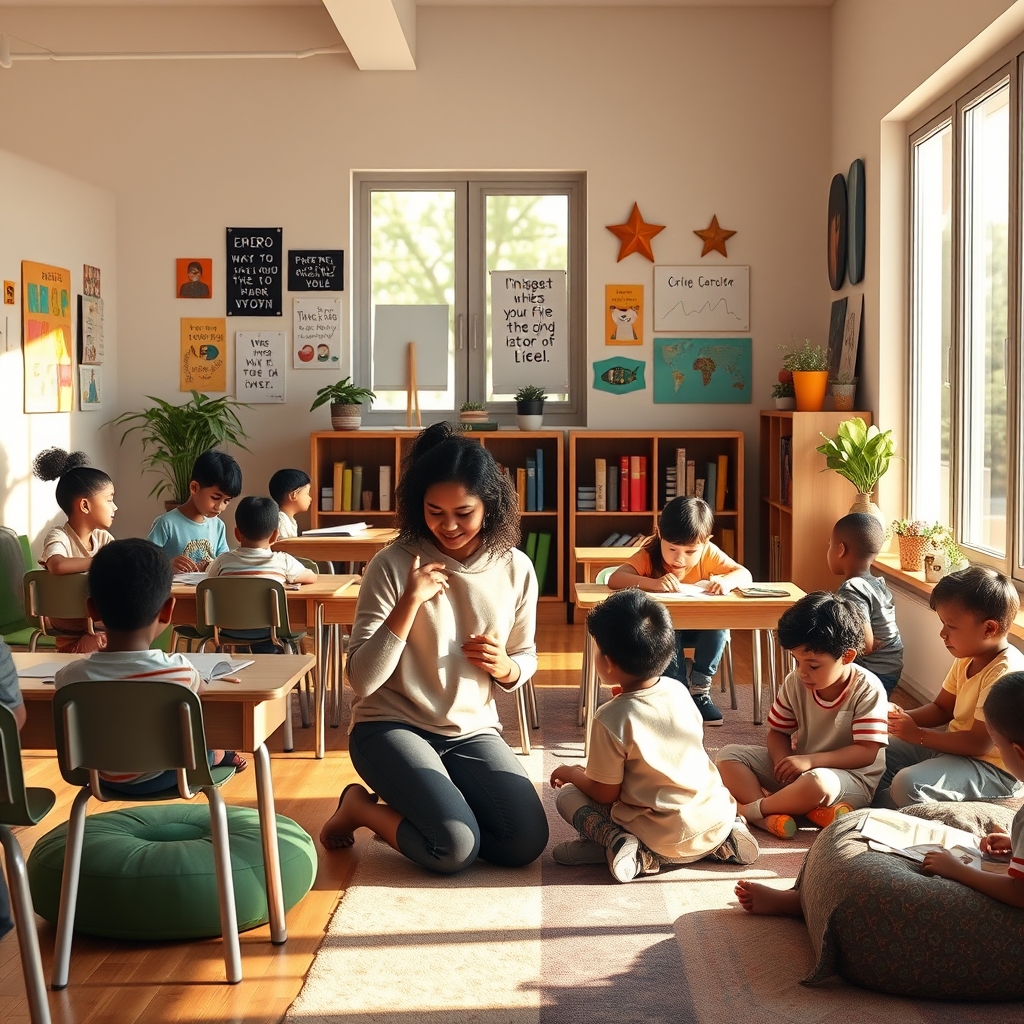
If we are to design classrooms that truly hold every story, we must begin by recognizing that they are not static spaces, but living, breathing organisms. They are shaped by the energy of the students who inhabit them, by the emotions that ebb and flow like tides, by the unspoken dynamics that govern who speaks and who is silenced. An inclusive classroom is one that adapts, that bends and flexes to accommodate the needs of its inhabitants. It is a space where the furniture can be rearranged to create quiet corners for those who need solitude, or open areas for collaboration. It is a place where the lighting can be adjusted, where the noise level is monitored, where the sensory environment is as carefully curated as the academic one.
But design is not just about the physical space. It is also about the emotional architecture of the classroom—the invisible structures that determine how students relate to one another and to their teacher. It is about the rituals that create a sense of community, the norms that foster respect, the language that affirms rather than diminishes. It is about the understanding that a child who acts out is not a problem to be fixed, but a human being in need of connection. It is about the willingness to see behavior not as a disruption, but as a form of communication, a cry for help that deserves to be heard.
The Neurodiversity Paradox
We live in an age where neurodiversity is celebrated in theory, but often pathologized in practice. We praise the unique strengths of autistic students, the creativity of those with ADHD, the resilience of children with learning disabilities—yet we still measure them against a standard that was never designed for them. We talk about inclusion, but we continue to build systems that reward conformity. We speak of equity, but we cling to assessments that favor a narrow definition of intelligence. The paradox of neurodiversity is that it challenges us to rethink everything we know about education, even as it exposes the limitations of our current frameworks.
To embrace neurodiversity is to reject the idea that there is one right way to learn, one right way to think, one right way to be. It is to recognize that the classroom is not a factory for producing identical products, but a garden where a thousand different flowers bloom. It is to understand that the goal of education is not to make every child fit the same mold, but to help each one discover their own unique shape. This is not a call for lower standards, but for a broader definition of what it means to succeed. It is a call to celebrate the child who learns through movement, the one who thrives in chaos, the one who sees the world in colors the rest of us cannot imagine.
The unspoken covenant of inclusive education is not a contract written in ink, but a promise whispered in the spaces between words. It is the quiet assurance that every child, no matter how different or difficult they may seem, has a place in the circle of learning. It is the understanding that belonging is not a privilege to be earned, but a right to be upheld. And it is the knowledge that the work of inclusion is never truly done—that it is a journey without end, a path that must be walked anew with each child, in each moment, with each breath. For in the end, the heart of education is not found in the lessons we teach, but in the love we give, the connections we forge, and the humanity we affirm in one another.