The Fragile Architecture of Trust: How Invisible Bridges Hold the Weight of Inclusive Education
The classroom is not merely a room with four walls; it is a living, breathing organism, pulsing with the quiet rhythms of young hearts learning to trust. Trust is not built in grand gestures or sweeping declarations—it is woven in the delicate threads of daily interactions, the way a teacher pauses before answering a question, the way a child’s hesitant hand is met with a nod rather than a correction. These are the invisible bridges that bear the weight of inclusion, the fragile architecture upon which every child’s sense of belonging rests.
The Geography of Small Gestures
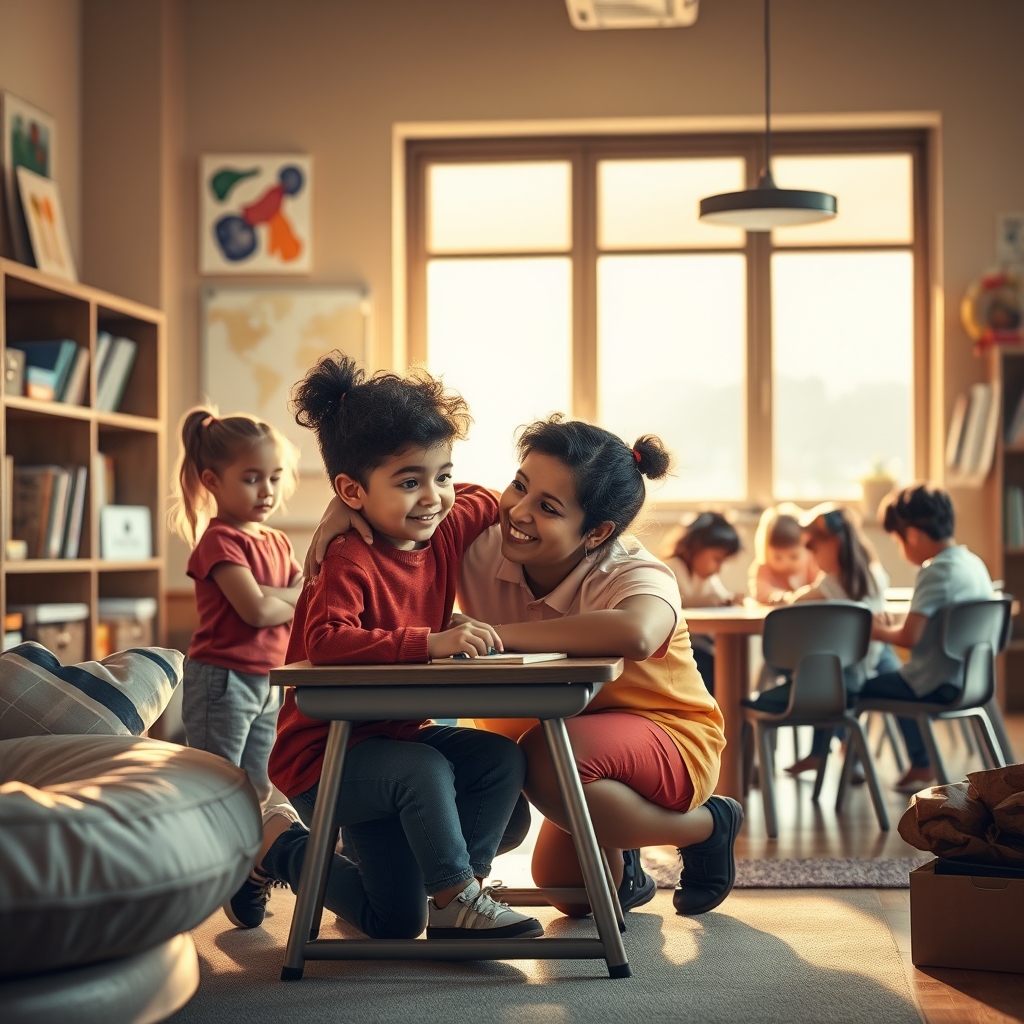
There is a geography to trust, a landscape mapped not in miles but in moments. It is the way a teacher kneels to eye level when speaking to a student who struggles with words, the way a classroom door remains open just a little longer for the child who lingers at the threshold. These are not strategies found in textbooks or professional development workshops; they are the unspoken covenants of human connection. Inclusive education does not begin with policies or programs—it begins in the quiet spaces between instruction, where a child learns that their presence is not just tolerated but cherished.
Yet, how often do we mistake the mechanics of inclusion for its soul? We measure success in accommodations made, in individualized plans drafted, in behavioral interventions executed. But the true measure of an inclusive classroom is not in the paperwork—it is in the way a child’s face lights up when they realize, perhaps for the first time, that they are seen. Not as a problem to be managed, not as a challenge to be overcome, but as a story waiting to unfold.
The Myth of the Perfect Classroom
We have been sold a myth: that if we just get the right strategies, the right tools, the right language, inclusion will happen effortlessly. But the reality is far messier. Inclusion is not a destination; it is a daily practice of showing up, again and again, with patience and humility. It is the teacher who admits when they don’t know the answer, the student who learns that mistakes are not failures but part of the journey. It is the understanding that neurodiversity is not a puzzle to be solved but a spectrum of human experience to be honored.
Consider the child who struggles with sensory overload, whose world is a cacophony of sounds and lights that others barely notice. The inclusive classroom does not demand that they adapt to the environment—it reshapes the environment to meet them where they are. It is the soft hum of a lamp instead of fluorescent glare, the option to step away without explanation, the unspoken permission to exist as they are. These are not concessions; they are acts of radical hospitality.
The Weight of Being Seen
There is a profound vulnerability in being truly seen. For children who have spent years navigating systems that were not built for them, the act of being acknowledged—without condition, without caveat—can feel like stepping into sunlight after a lifetime in shadow. This is the heart of social-emotional learning: not a curriculum to be mastered but a way of being in the world. It is the quiet courage of a child who raises their hand even when they are afraid of being wrong, the resilience of a student who learns that their voice matters even when it shakes.
But how do we teach this? Not through worksheets or rubrics, but through the daily alchemy of presence. It is the teacher who remembers the name of a student’s pet, the way a classmate offers a pencil without being asked. These are the small, sacred acts that build the scaffolding of trust. They are not dramatic, but they are revolutionary.
The Unseen Labor of Inclusion
Inclusion is often invisible labor. It is the extra hour spent adapting a lesson, the emotional energy of holding space for a child in crisis, the quiet advocacy for a student whose needs are overlooked. It is the teacher who stays late to rearrange desks for better accessibility, the administrator who fights for funding for a sensory room. This work is not glamorous, but it is essential. It is the difference between a child feeling like a guest in their own education and knowing, deep in their bones, that they belong.
Yet, we live in a world that demands quick fixes and measurable outcomes. We want data, benchmarks, evidence that our efforts are working. But how do you measure trust? How do you quantify the moment a child realizes they are not alone? These are the intangibles, the quiet victories that never make it into a report but echo in the lives of children long after they leave the classroom.
The Poetry of Imperfection
Inclusive education is not about perfection—it is about presence. It is the understanding that there will be days when the lesson plan falls apart, when a behavioral intervention fails, when a child’s frustration spills over into the room. These are not failures; they are invitations. They are the cracks in the system that let the light in, the moments that remind us that education is not about control but about connection.
Perhaps the greatest gift we can offer a child is not a flawless education but an honest one. A classroom where mistakes are not hidden but explored, where struggles are not shamed but supported. This is the essence of differentiated instruction—not a set of techniques but a philosophy of respect. It is the belief that every child has something to teach us, if only we are willing to listen.
The classroom is a microcosm of the world we wish to create—a place where every child, regardless of ability or background, is given the space to grow. But this world does not build itself. It is constructed, day by day, in the small acts of kindness, the quiet moments of understanding, the fragile bridges of trust that hold us all. And though these bridges may seem delicate, they are stronger than we know. For in the end, it is not the grand gestures that sustain us, but the quiet certainty that we are not alone.