The Hidden Curriculum of the Heart: How Emotional Landscapes Shape the Geography of Learning
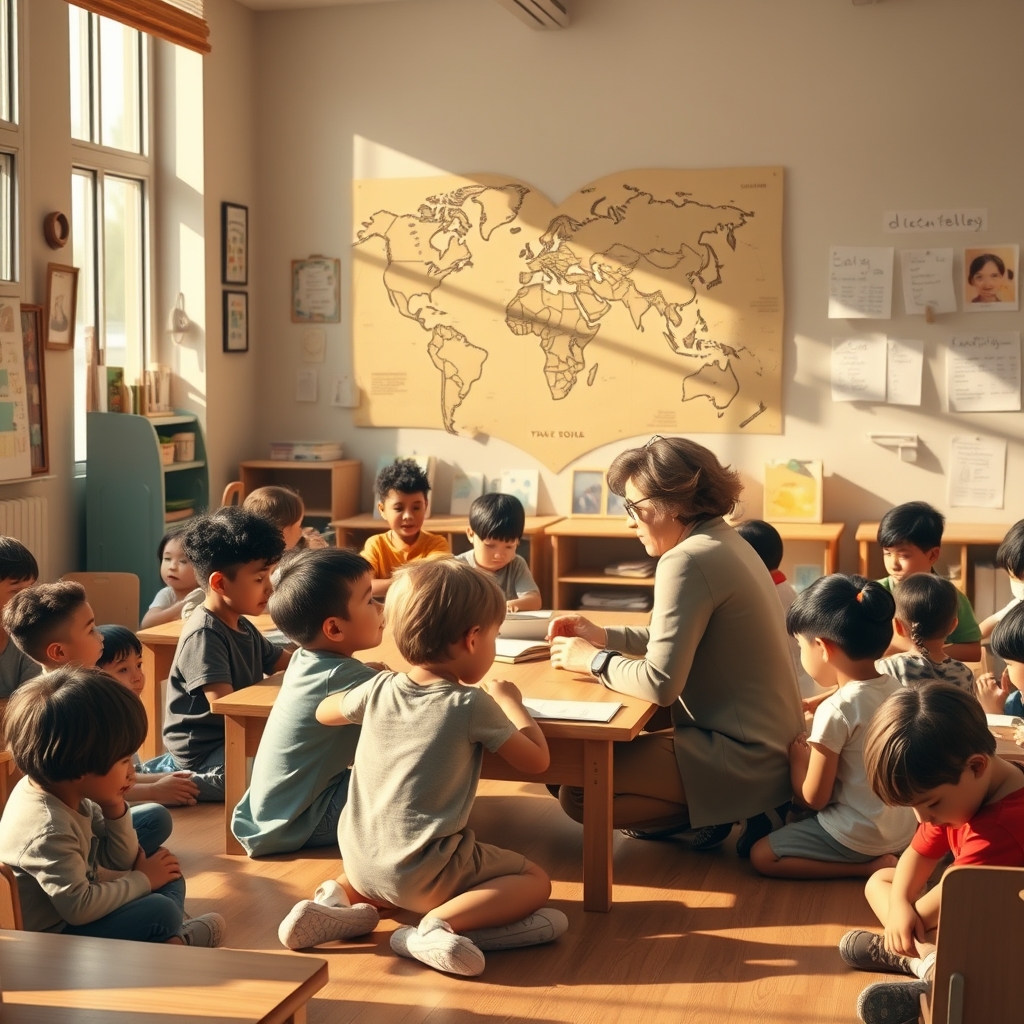
The classroom is not merely a room with four walls, desks, and a chalkboard; it is a living, breathing entity, a microcosm of the world outside, where the heart’s quiet murmurs often speak louder than the most eloquent of lessons. Within this space, children do not just learn to read, write, or solve equations—they learn to navigate the complex terrain of their own emotions, to recognize the contours of their fears, and to chart the vast, uncharted territories of their hopes. This is the hidden curriculum of the heart, the silent syllabus that shapes not just what children know, but who they become.
The Unseen Syllabus
Every teacher knows the weight of the official curriculum—the standards to meet, the benchmarks to achieve, the assessments that loom like storm clouds on the horizon. Yet, beneath this visible structure lies another, more subtle framework, one that is rarely written down but is felt in every glance, every hesitation, every moment of connection or disconnection. This is the curriculum of emotional landscapes, where the geography of learning is not measured in miles but in moments of vulnerability, resilience, and belonging. It is here, in the quiet spaces between lessons, that the true work of education unfolds.
Consider the child who sits in the back of the room, arms crossed, eyes darting away whenever the teacher calls their name. On the surface, they may appear disengaged, even defiant. But peel back the layers, and you might find a landscape of anxiety, a child who fears failure so deeply that silence becomes their shield. Or the student who always raises their hand first, not because they know the answer, but because they crave the validation that comes with being seen. These are not just behaviors to be managed; they are maps of the heart, waiting to be read with patience and care.
The Art of Emotional Cartography
To teach is to be a cartographer of the soul, to trace the invisible lines that connect a child’s inner world to their outer experiences. This is not a task for the faint of heart. It requires a willingness to sit with discomfort, to listen not just to the words a child speaks, but to the ones they leave unspoken. It demands an understanding that every child carries within them a unique emotional topography—some with gentle hills of confidence, others with jagged peaks of trauma, and still others with vast, unexplored valleys of potential.
Social Emotional Learning (SEL) is often framed as a set of skills to be taught: self-awareness, self-management, social awareness, relationship skills, and responsible decision-making. But what if we thought of SEL not as a checklist, but as an invitation? An invitation to explore the inner landscapes of our students, to help them name the emotions that surge within them like tides, and to guide them in navigating these waters with grace. This is not about turning emotions into another subject to be mastered, but about honoring them as the very foundation upon which all learning rests.
The Classroom as a Sanctuary
If the hidden curriculum of the heart is to flourish, the classroom must become a sanctuary—a place where children feel safe enough to lower their defenses, to risk being seen, and to trust that their vulnerabilities will be met with compassion. This is not a matter of grand gestures, but of small, consistent acts of kindness and understanding. It is in the way a teacher pauses to check in with a student who seems withdrawn, or the way they celebrate not just the correct answer, but the courage it took to speak up. It is in the way they create space for silence, allowing students to sit with their thoughts before rushing to fill the void with words.
Inclusive education is often discussed in terms of accommodations and adaptations, of strategies to ensure that every child has access to the same opportunities. But true inclusion goes deeper. It is about designing a classroom that does not just tolerate differences, but embraces them as essential threads in the tapestry of learning. It is about recognizing that neurodiversity is not a deviation from the norm, but a vital part of the human experience, one that enriches the collective understanding of what it means to think, to feel, and to be.
The Teacher as a Gardener of Souls
Teaching, at its core, is an act of faith. It is a belief that every child, no matter their starting point, has within them the capacity to grow, to change, and to bloom in ways that defy expectation. But growth does not happen in a vacuum. It requires the right conditions—soil rich with nutrients, sunlight to nourish, and water to sustain. In the classroom, these conditions are created through the alchemy of trust, patience, and unconditional regard.
This is where the concept of differentiated instruction takes on a deeper meaning. It is not just about tailoring lessons to meet the diverse needs of students, but about seeing each child as a unique ecosystem, one that requires its own balance of challenge and support. It is about understanding that a child with a learning disability is not broken, but simply navigating the world in a way that is different from the majority. And it is about creating a space where those differences are not just accommodated, but celebrated as part of the rich diversity of human experience.
The Geography of Belonging
At the heart of the hidden curriculum is the longing for belonging—a need as fundamental as air or water. Children do not just want to be included; they want to feel that they are an indispensable part of something larger than themselves. This is the true promise of inclusive education: not just to bring every child into the classroom, but to ensure that every child feels that the classroom is theirs, that their voice matters, and that their presence enriches the whole.
But belonging is not something that can be mandated or measured. It is not a box to be checked on a list of best practices. It is something that must be cultivated, nurtured, and tended to with the same care as a garden. It requires teachers to see beyond the surface, to recognize the quiet child in the corner as much as the boisterous one in the front row. It demands that we create spaces where children can express themselves authentically, without fear of judgment or ridicule. And it asks us to remember that the most powerful lessons are not the ones we teach, but the ones we embody through our actions, our words, and the way we hold space for the hearts of our students.
The classroom is more than a place of instruction; it is a living, breathing entity where the geography of the heart is mapped in real time. Every laugh, every tear, every moment of frustration or triumph is a point on that map, a testament to the complex, beautiful, and often messy journey of learning. And though the official curriculum may one day fade from memory, the lessons of the heart—the ones that teach us how to be human—will linger long after the last bell has rung, echoing in the quiet spaces where the soul remembers what the mind forgets.