The Echo Chamber of Empathy: Listening for the Unheard Voices in Education
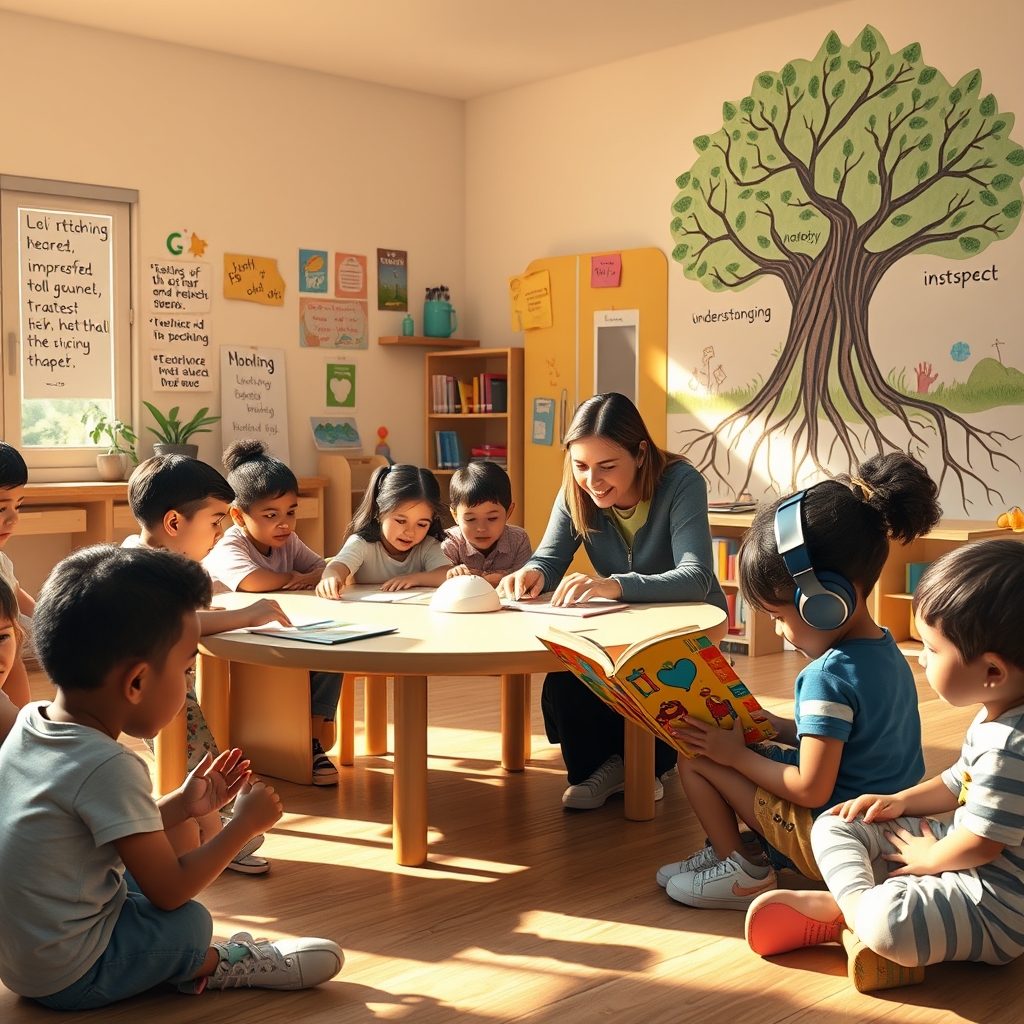
There is a quiet hum in every classroom, a frequency that vibrates beneath the surface of lessons and laughter, of raised hands and rustling papers. It is the sound of unseen stories, of children who carry more than backpacks—who carry the weight of unmet needs, of unspoken struggles, of identities that do not fit neatly into the boxes we have drawn for them. To teach is to listen for this hum, to attune ourselves to the frequencies of the unseen and the unheard. But how often do we mistake the echo of our own assumptions for the voices of those we seek to serve?
The Illusion of Inclusion
Inclusion is not a checklist. It is not a policy drafted in sterile conference rooms, nor is it a quota to be met or a statistic to be celebrated. True inclusion is a living, breathing entity, a dynamic interplay of hearts and minds that refuses to be confined by the rigid structures of traditional pedagogy. Yet, too often, we reduce it to a performance—a carefully choreographed dance where the steps are rehearsed, but the music is missing. We invite diversity into the classroom, but do we truly make space for it? Or do we simply rearrange the furniture while leaving the walls intact?
The illusion of inclusion is seductive. It allows us to believe we are doing enough, that the mere presence of difference is sufficient. But presence without belonging is just another form of erasure. A child with a learning disability may sit in the same room as their peers, but if their needs are met with frustration rather than understanding, if their struggles are framed as deficits rather than differences, then the classroom is not inclusive—it is a gilded cage. The echo of their voice bounces off the walls, but no one is listening.
The Weight of the Unseen
There is a myth that education is a neutral act, that the transmission of knowledge is a transaction free from the burdens of emotion, identity, or trauma. But the truth is far more complex. Every child who walks into a classroom brings with them a universe of experiences—some luminous, some fractured, all shaping the way they engage with the world. A child who has known hunger may struggle to focus on algebra. A child who has been told they are “too much” may shrink into silence. A child who has learned to mask their neurodivergence may exhaust themselves trying to perform “normalcy.”
Mental health education is not a unit to be taught in isolation; it is the air we breathe in the classroom. It is the way we greet our students, the tone we use when we correct them, the patience we extend when they falter. It is the recognition that behavior is not a moral failing but a form of communication, a language we must learn to interpret. When we pathologize a child’s struggles without seeking to understand their roots, we become complicit in the very systems we claim to dismantle. The echo of their pain grows louder, but we mistake it for noise.
The Alchemy of Adaptive Learning
Differentiated instruction is not a pedagogical trick; it is an act of alchemy. It is the transformation of a single lesson into a thousand pathways, each tailored to the unique contours of a child’s mind. But alchemy requires more than technique—it demands humility. It asks us to承认 that we do not hold all the answers, that the map of a child’s learning is not ours to draw but theirs to navigate. Adaptive learning methods are not tools for efficiency; they are bridges built one plank at a time, each step a negotiation between what we know and what we are willing to learn.
Yet, the pressure to standardize, to measure, to quantify, often reduces this alchemy to a formula. We create Individualized Education Plans (IEPs) that read like legal documents rather than love letters to a child’s potential. We design interventions that prioritize compliance over curiosity, control over connection. The echo of our good intentions drowns out the voices of the children we seek to empower. What if, instead of asking how we can fix them, we asked how we can meet them where they are?
The Classroom as a Living Organism
An inclusive classroom is not a static space; it is a living organism, constantly evolving in response to the needs of those who inhabit it. It is a place where neurodiversity is not tolerated but celebrated, where emotional literacy is as valued as academic achievement, where the curriculum bends to accommodate the child, not the other way around. This is not utopia—it is possibility. It is the recognition that equity is not about giving everyone the same thing but about ensuring everyone has what they need to thrive.
But possibility requires courage. It asks us to dismantle the hierarchies that have long defined education—the belief that some minds are more worthy than others, that some ways of learning are superior, that some children are “broken” and need fixing. It asks us to see the classroom not as a factory for producing uniform outcomes but as a garden where every seed, no matter how different, is given the space to grow. The echo of our old paradigms lingers, but we must choose whether to amplify it or let it fade into silence.
The Unfinished Symphony
Teaching is not a destination; it is a journey without end. There is no final note in the symphony of education, no perfect harmony that can be achieved and then preserved. The work of inclusion, of empathy, of adaptive learning, is never complete. It is a daily practice, a series of small acts that accumulate into something greater than the sum of their parts. It is the choice to listen when the world tells us to speak, to pause when the world tells us to rush, to see when the world tells us to look away.
The echo chamber of empathy is not a place where voices bounce back unchanged; it is a space where they are transformed, where the unheard become the understood, where the unseen become the known. It is the quiet revolution of hearts opening, one classroom at a time. And perhaps, in the end, that is enough—not because it solves everything, but because it reminds us that the work was never about perfection. It was always about connection.