
The Alchemy of Small Gestures: How Everyday Moments Transmute the Lead of Exclusion into the Gold of Belonging
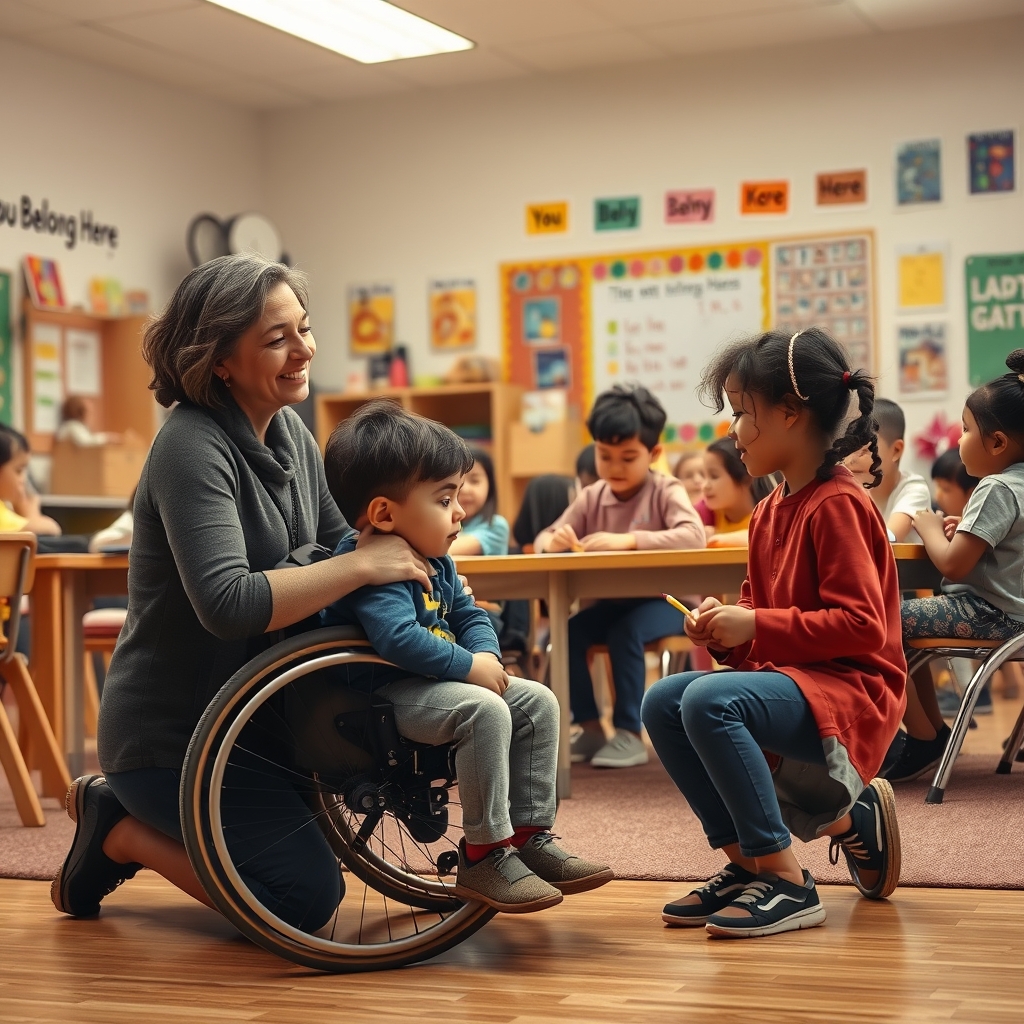
There is a quiet magic in the way a teacher’s gaze lingers just a second longer on the child who always sits alone, or how a handwritten note tucked into a desk can feel like a secret handshake between worlds. These are not grand gestures, not the stuff of policy documents or professional development seminars, but the alchemy of small, almost invisible acts that transmute the leaden weight of exclusion into the luminous gold of belonging. In the crucible of the classroom, where every child arrives with their own unique alloy of strengths, struggles, and silent stories, it is these fleeting moments that often hold the most power.
The Unseen Chemistry of Connection
Education is often framed in terms of measurable outcomes—test scores, graduation rates, the cold calculus of achievement gaps. But what of the unquantifiable? The way a child’s shoulders relax when they realize they are seen, not just as a set of deficits to be remediated, but as a whole person, brimming with potential and possibility? The chemistry of connection is not found in spreadsheets or standardized assessments, but in the way a teacher kneels to eye level when speaking to a student in a wheelchair, or how a peer offers a pencil without being asked, recognizing the unspoken need behind a fumbling hand. These are the reactions that occur in the margins, the spaces between lessons where the real work of inclusion happens.
Consider the child with autism who struggles with sensory overload, for whom the fluorescent hum of the classroom is a relentless assault. A teacher who dims the lights for five minutes, or allows a fidget toy to remain in sight, is not just accommodating a need—they are performing a kind of alchemy. They are taking the raw, unrefined elements of a system that often feels designed to exclude, and transforming them into something that says, You belong here. Your way of being is not a problem to be solved, but a perspective to be valued.
The Crucible of Patience
Patience, in the context of inclusive education, is not merely the absence of frustration, but an active, almost sacred force. It is the willingness to sit with discomfort, to resist the urge to rush a child who processes language more slowly, or to reframe a question when a student’s eyes cloud with confusion. It is the quiet resolve to see a meltdown not as a disruption, but as a communication, a cry for help that has not yet found its words. In this crucible, patience becomes a catalyst, breaking down the barriers that separate us from them and revealing the shared humanity beneath.
This kind of patience is not innate; it is cultivated, often through trial and error, through the humbling realization that what works for one child may fail spectacularly for another. It is the teacher who stays after school to practice social scripts with a student who struggles with peer interactions, or the one who learns sign language not because it is required, but because it is the only way to truly reach a child who has spent years feeling invisible. These are not heroic acts, but human ones, born of the understanding that inclusion is not a destination, but a daily practice.
The Philosopher’s Stone of Empathy
If patience is the crucible, then empathy is the philosopher’s stone—the legendary substance said to turn base metals into gold. In the classroom, empathy is the ability to step into another’s world, to see the landscape of their experiences not as a foreign country, but as a place where their own humanity is reflected back at them. It is the teacher who recognizes that the child who acts out is not bad, but hurting, or the one who understands that the student who never speaks in class may have a voice that simply needs a different medium to be heard.
Empathy is not a soft skill, but a radical act of resistance in a world that often values efficiency over connection, uniformity over diversity. It is the quiet defiance of a teacher who refuses to label a child as difficult or lazy, choosing instead to ask, What is this behavior trying to tell me? It is the peer who sits with the new student at lunch, not out of pity, but out of a recognition that everyone carries their own invisible burdens. In these moments, empathy becomes the alchemical agent that transforms isolation into belonging, fear into safety, and silence into voice.
The Transmutation of Systems
Yet, the alchemy of small gestures does not exist in a vacuum. It is both shaped by and shapes the systems in which it operates. A teacher’s patience is tested when they are expected to meet impossible benchmarks, or when a child’s Individualized Education Plan (IEP) becomes a bureaucratic hurdle rather than a living document of support. The philosopher’s stone of empathy loses its luster when schools are underfunded, classrooms are overcrowded, and teachers are stretched thin by the relentless demands of a system that often prioritizes compliance over compassion.
This is where the true work of alchemy begins—not just in the individual acts of kindness, but in the collective effort to transform the systems that make those acts necessary. It is in the push for policies that value neurodiversity, not as a problem to be managed, but as a natural part of the human experience. It is in the demand for professional development that goes beyond surface-level awareness and delves into the messy, beautiful work of true inclusion. It is in the recognition that equity is not about treating everyone the same, but about ensuring that every child has what they need to thrive.
The Gold in the Gaps
Perhaps the most profound alchemy occurs not in the moments of grand transformation, but in the gaps—the spaces between what is taught and what is learned, between what is said and what is heard, between the curriculum and the child. It is in these gaps that the real magic happens, where a teacher’s offhand comment becomes a lifeline, or a peer’s casual invitation to join a game becomes the first step toward friendship. These are the moments that do not make it into lesson plans or data reports, but they are the ones that shape a child’s sense of self, their belief in their own worth, and their capacity to imagine a future where they belong.
In the end, the alchemy of small gestures is not about fixing what is broken, but about revealing what has always been there—the inherent value of every child, the untapped potential in every struggle, and the quiet strength in every act of connection. It is about recognizing that the gold of belonging was never something to be created, but something to be uncovered, polished, and held up to the light so that everyone can see its brilliance.