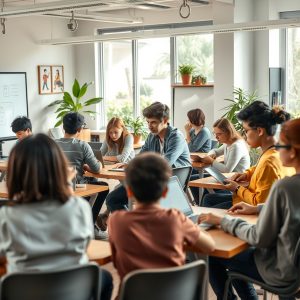
The Ghosts in the Classroom: How Invisible Barriers Shape the Soul of Education
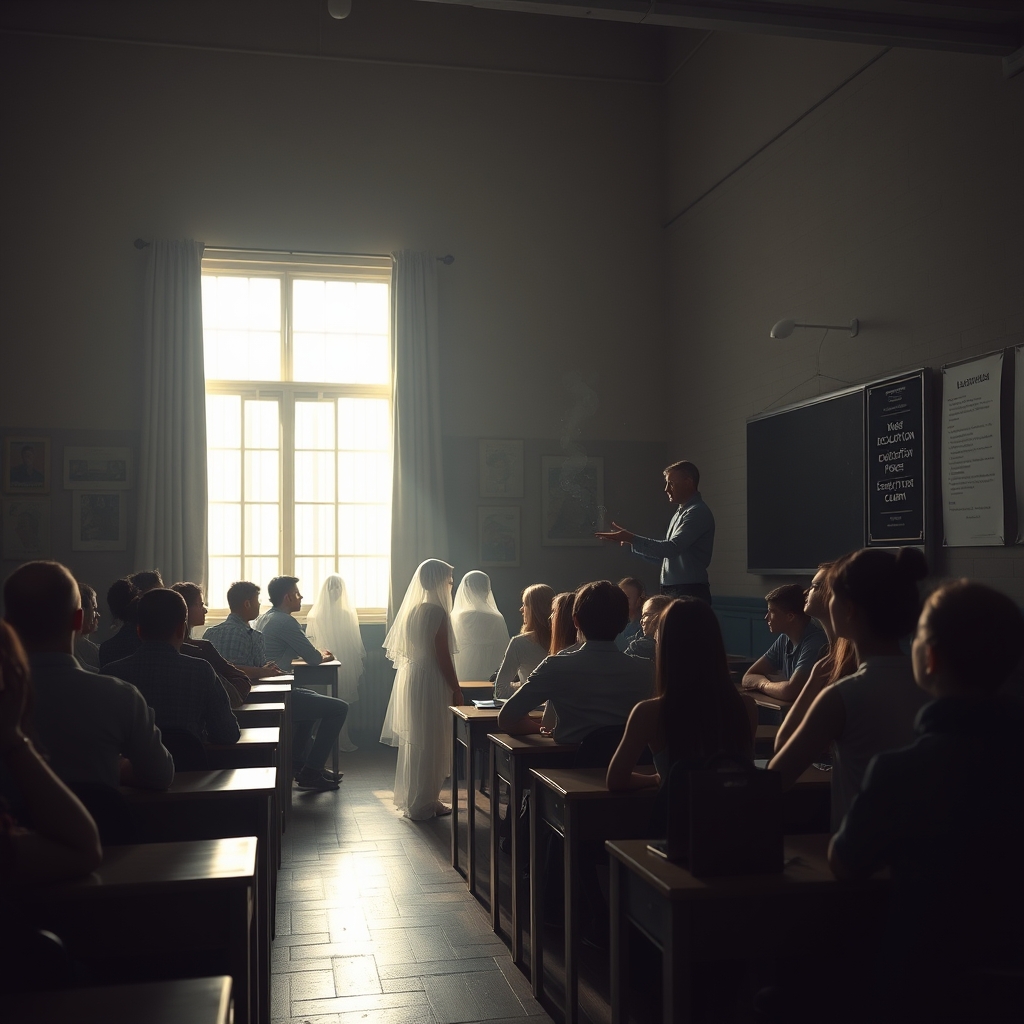
There is a quiet presence in every classroom, one that lingers in the corners where the fluorescent lights flicker just a little too long. It is not the hum of the air conditioner or the distant chatter of students in the hallway. It is something deeper, something almost spectral—the unspoken weight of what we choose to see and what we allow to remain unseen. Education, in its most noble form, is supposed to be a beacon, a force that illuminates the path for every learner. Yet, too often, it feels like we are building lighthouses on shifting sands, their beams flickering over some while leaving others to navigate the darkness alone.
The Architecture of Silence
Inclusive education is not a new concept. It has been whispered in faculty meetings, shouted in keynote speeches, and scribbled in the margins of lesson plans for decades. Yet, for all the ink spilled and the hours spent in professional development workshops, the reality of the classroom often tells a different story. The ghosts here are not the ones of folklore, but the ones born from systemic neglect—the child with dyslexia who stares at a page of text as if it were written in an alien script, the student with ADHD who is labeled “disruptive” because their mind refuses to sit still, the quiet girl in the back who dissolves into the background because her anxiety is invisible to the naked eye.
These are not anomalies. They are the rule, not the exception. And yet, the structures we have built—curricula, assessments, even the physical layout of classrooms—often feel like they were designed for a mythical “average” student, one who exists only in the imagination of policymakers. The rest are left to adapt, to contort themselves into shapes that fit the mold, or to fade into the shadows. The question is not whether we can do better, but whether we are willing to confront the ghosts that haunt our systems.
The Myth of the Perfect Intervention
We have become obsessed with the idea of the “perfect” intervention, as if there exists a single strategy, a silver bullet, that can dismantle the barriers to learning. Differentiated instruction, individualized education plans, behavioral interventions—these are not solutions in and of themselves. They are tools, and like any tool, their effectiveness depends on the hands that wield them. A hammer can build a house or shatter a window. A lesson plan can unlock a mind or reinforce the walls that keep a child trapped in their own struggles.
Take, for example, the Individualized Education Plan (IEP). On paper, it is a document of hope, a roadmap tailored to a student’s unique needs. In practice, it is often a bureaucratic exercise, a checklist of accommodations that may or may not be implemented with fidelity. Teachers, already stretched thin, are expected to juggle these plans alongside standardized testing mandates, curriculum pacing guides, and the ever-present demand to “close the achievement gap.” The result? A system that pays lip service to inclusion while perpetuating the very inequities it claims to address.
The Human Cost of Performative Inclusion
There is a performative aspect to modern education that is as exhausting as it is disheartening. We stage “inclusive” classrooms like theater productions, complete with carefully curated displays of diversity and scripted moments of empathy. But what happens when the curtain falls? The student with autism who is celebrated during “Neurodiversity Awareness Week” but ignored the other 51 weeks of the year. The child with emotional disturbances who is given a “calm-down corner” but no real tools to navigate their emotions. The gifted learner who is left to languish because their needs do not fit neatly into the boxes we have created.
This is not to say that progress has not been made. There are educators who fight tirelessly to create spaces where every child feels seen, heard, and valued. But these efforts are often undermined by a system that prioritizes metrics over humanity, compliance over creativity, and efficiency over empathy. The ghosts in the classroom are not just the students we overlook—they are the parts of ourselves that we silence when we accept the status quo.
The Alchemy of Adaptive Learning
If there is a way forward, it lies not in grand gestures or sweeping reforms, but in the small, daily acts of alchemy that transform the ordinary into the extraordinary. Adaptive learning methods, when used thoughtfully, can be a part of this transformation. They are not a panacea, but they can be a bridge—a way to meet students where they are, rather than where we expect them to be. The key, however, is to remember that technology is only as good as the intentions behind it. An algorithm can personalize a lesson, but it cannot replace the human connection that is at the heart of true learning.
This is where the concept of holistic education becomes vital. It is not enough to focus on academic outcomes alone. We must also tend to the emotional, social, and psychological well-being of our students. Social-emotional learning, character education, and mental health support are not add-ons or luxuries—they are the foundation upon which all other learning is built. When we ignore these aspects, we are not just failing our students; we are failing ourselves, because we are perpetuating a cycle of disconnection that leaves no one unscathed.
The Unseen Curriculum
Every classroom has two curricula: the one that is written in textbooks and lesson plans, and the one that is lived in the unspoken dynamics between teacher and student, in the power structures that dictate who gets to speak and who is silenced, in the messages we send—intentionally or not—about whose voices matter. This unseen curriculum is where the ghosts of education truly reside. It is where biases take root, where stereotypes are reinforced, and where the seeds of self-doubt are planted in the minds of children who do not fit the mold.
To confront these ghosts, we must first acknowledge their existence. We must ask ourselves difficult questions: Whose needs are being prioritized in our classrooms? Whose are being overlooked? What invisible barriers are we perpetuating, even as we claim to be breaking them down? These are not questions with easy answers, but they are necessary ones. Because the alternative—to continue as we are—is to accept a system where some students thrive while others are left to haunt the margins.
The classroom should not be a place where ghosts linger. It should be a space of light, of growth, of possibility. But light does not banish shadows by ignoring them. It does so by shining brightly enough to reveal what has been hidden, to bring the unseen into focus. The work of education is not just about teaching facts or skills—it is about seeing the whole child, in all their complexity, and refusing to let any part of them remain in the dark. The ghosts will always be there, whispering in the corners. The question is whether we will listen.